DANCE OF THE MELISSAE
1994
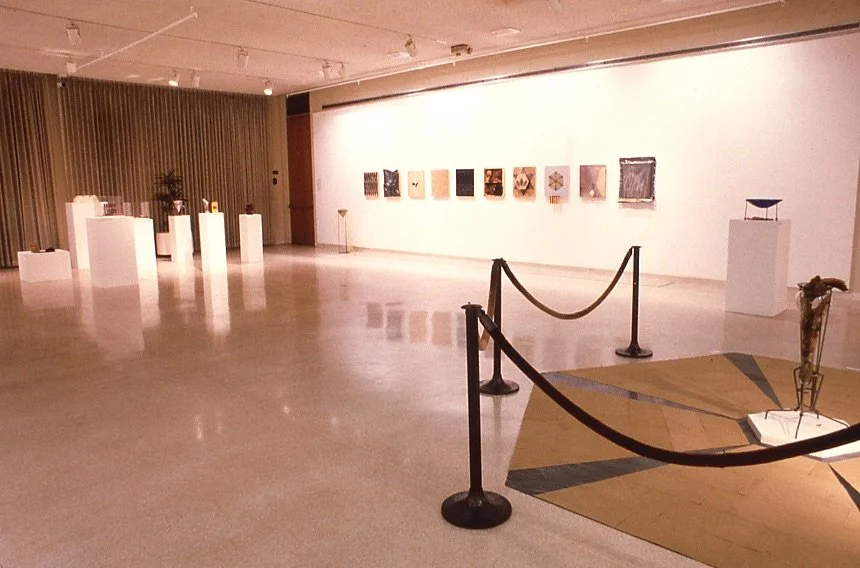
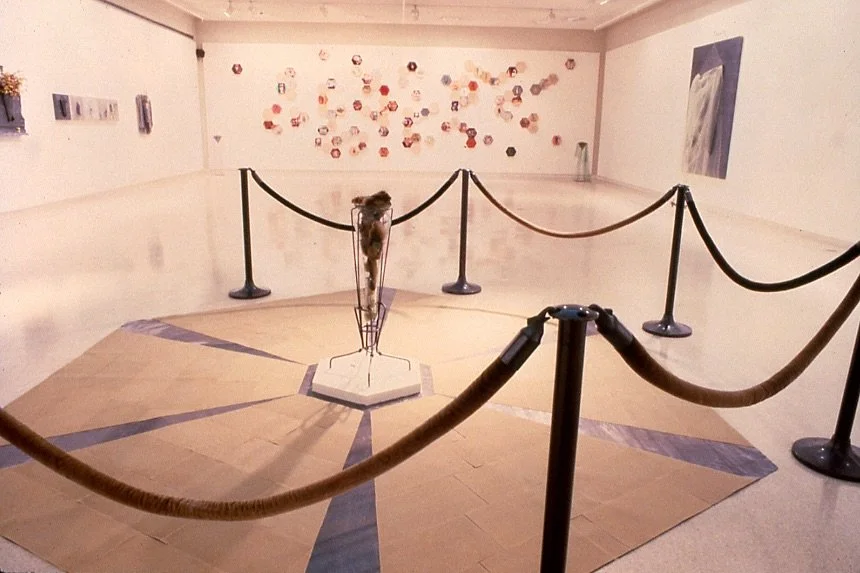
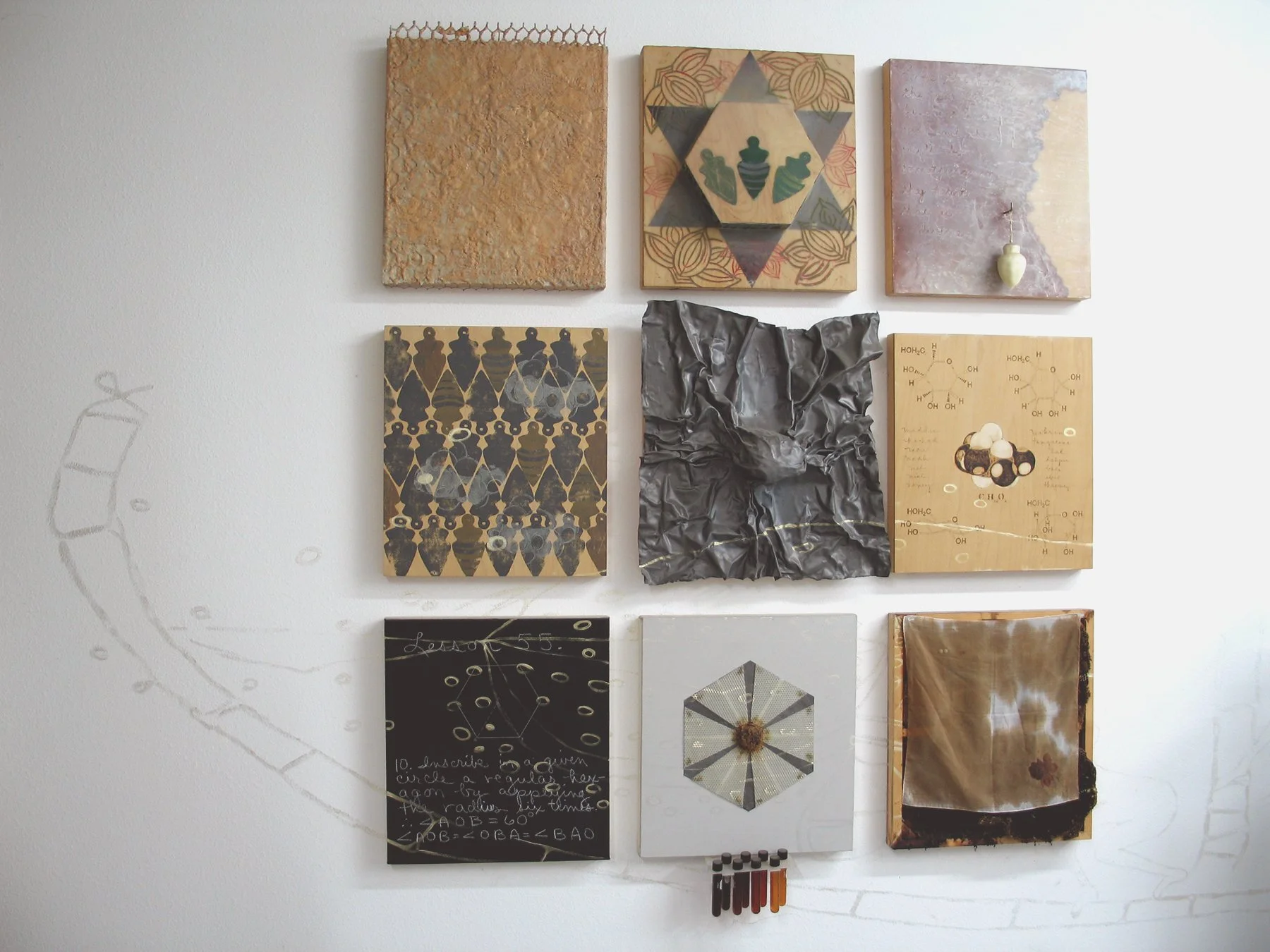

"The exhibition thus becomes an investigation of the Enlightenment from the perspective of the practitioner; Nancy Macko's critique of the information world suggests a Kuhnian paradigmatic shift in which technology becomes ritual, science reverts to magic and art is removed from the site of culture and comes back to life."
~ J.M.S. Willette, "How Sweet It Is," ARTWEEK, 2/17/94
The Large Votives
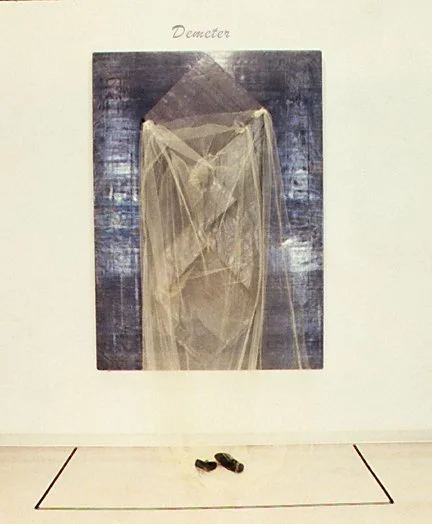
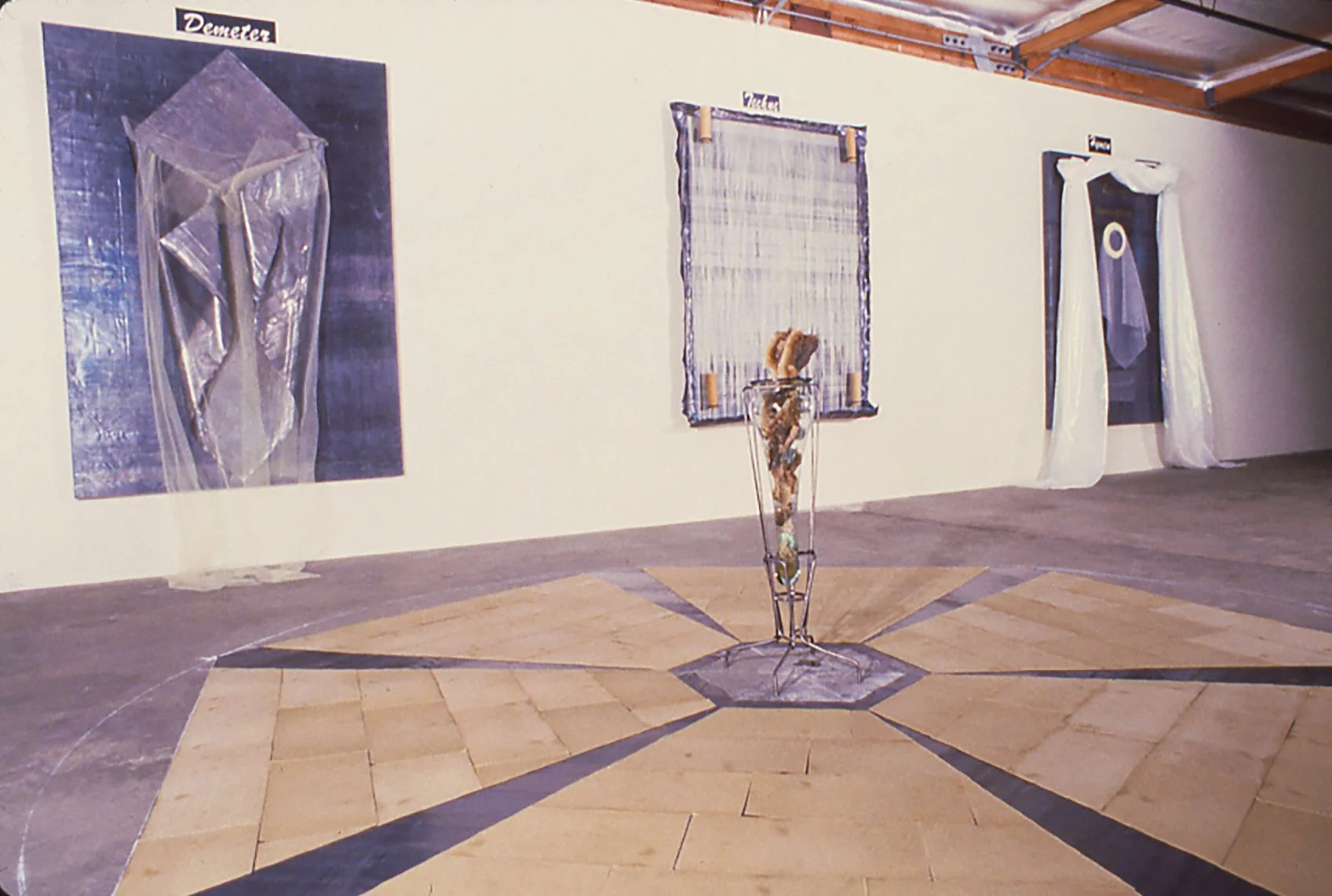
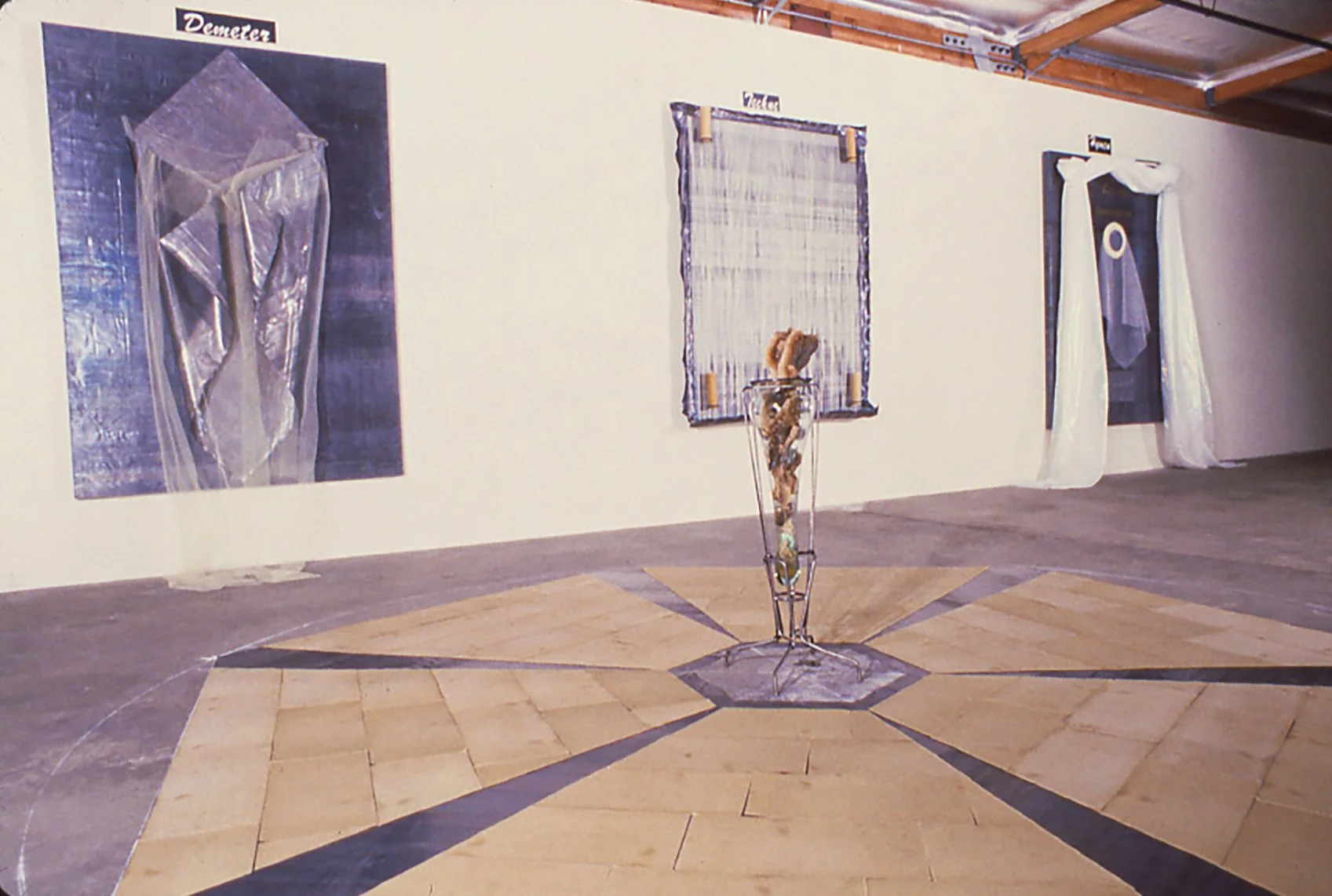
Demeter, 7 X 5 ft, mixed media on lead panel
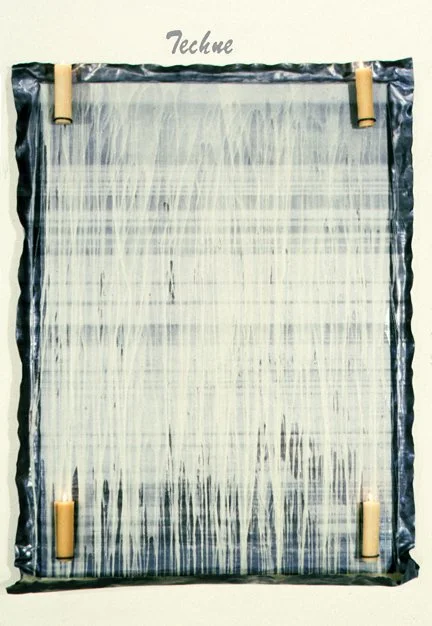
Techne, 7 X 5 ft, mixed media on lead panel
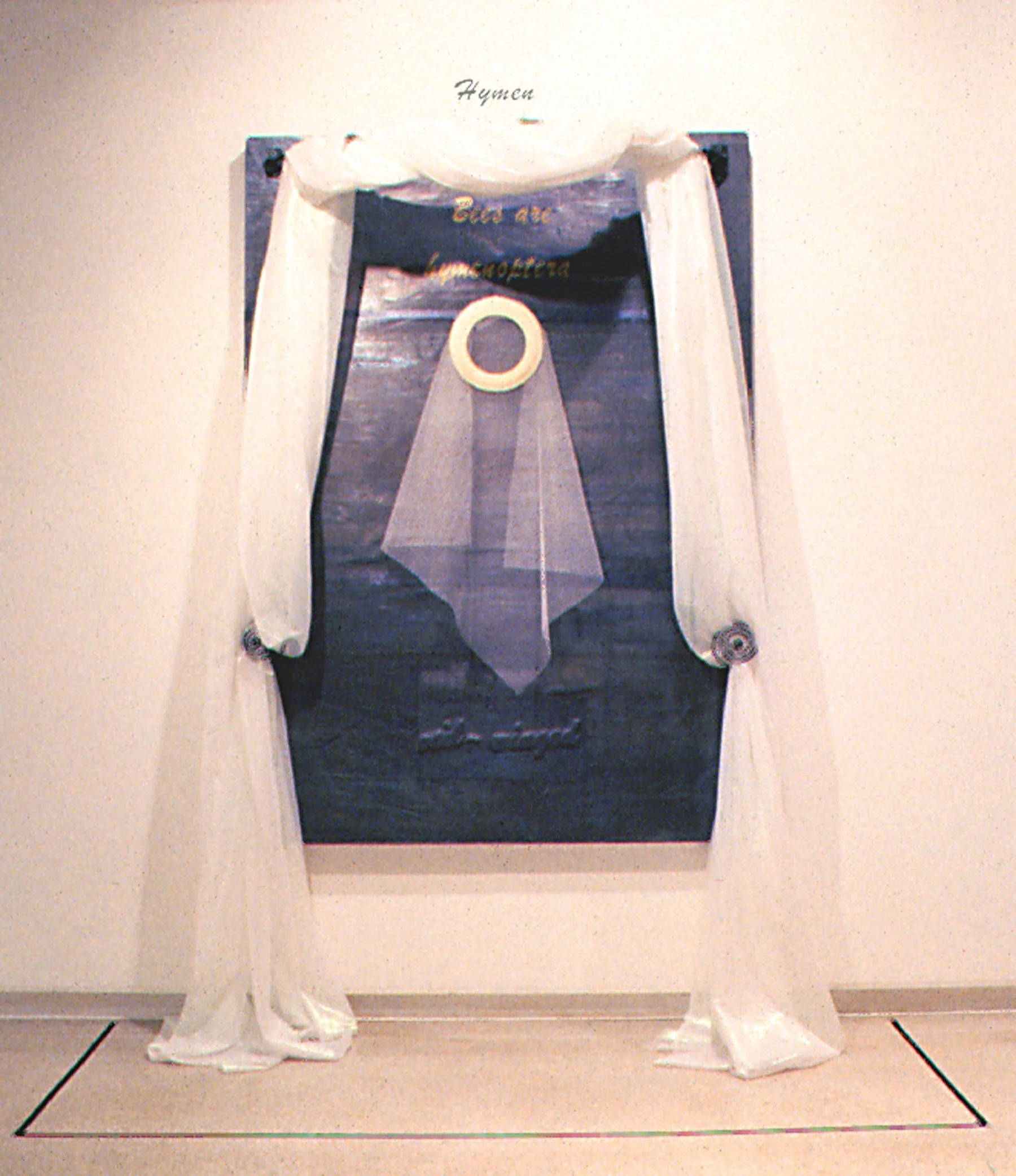
Hymen, 7 X 5 ft, mixed media on lead panel
"There is a spiritual and feminist dimension to Macko's imagery. In The Large Votives she connects the bee society, in which the queen bee reigns, to matriarchal religions, in which goddesses were central....For Macko, the goddess symbolizes a female centered spirituality and the bee society represents 'the feminine potency of nature.' "
~ Mary Davis MacNaughton
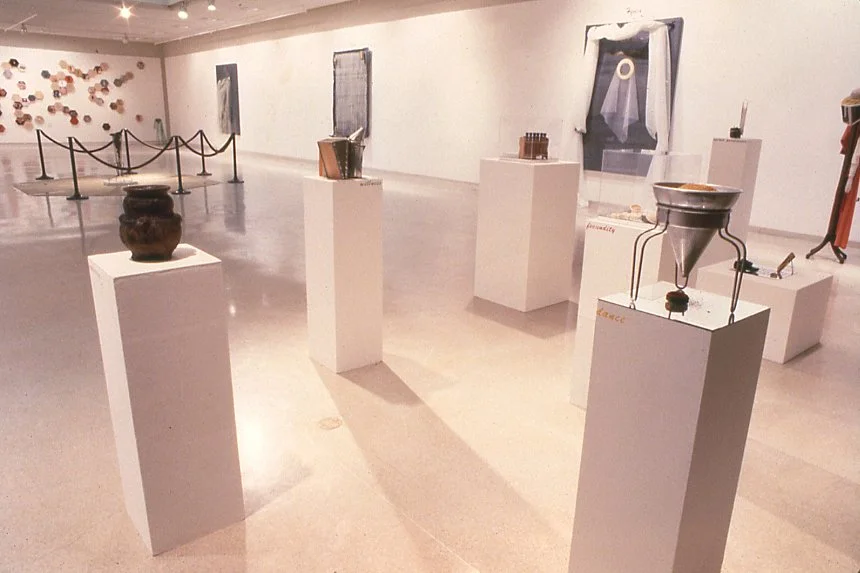
Stations of the Goddess
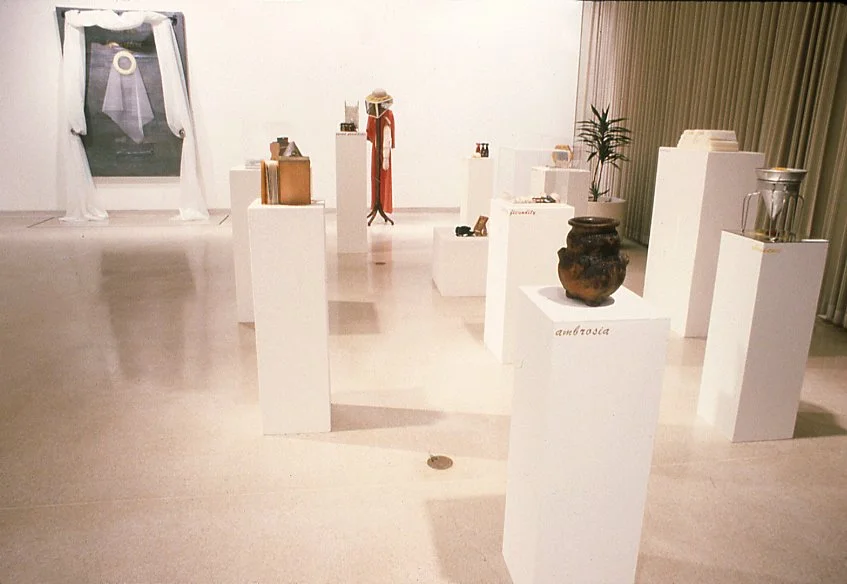
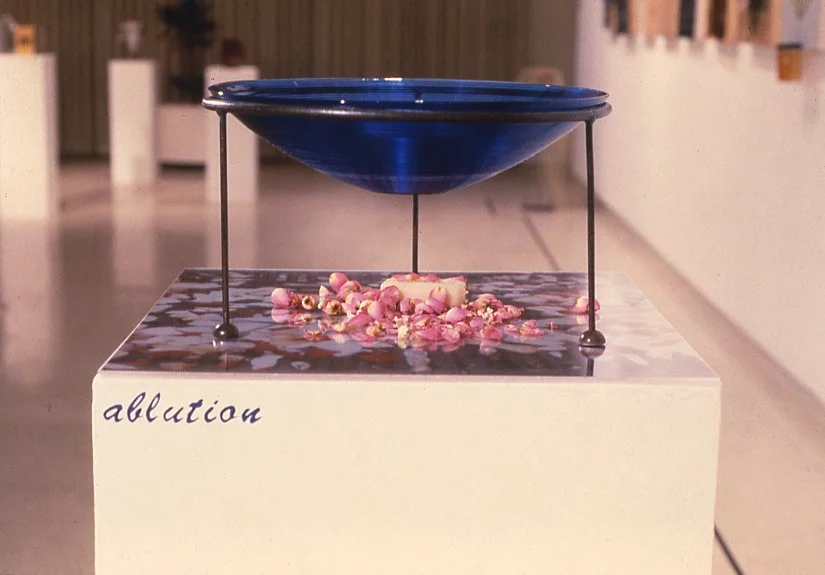
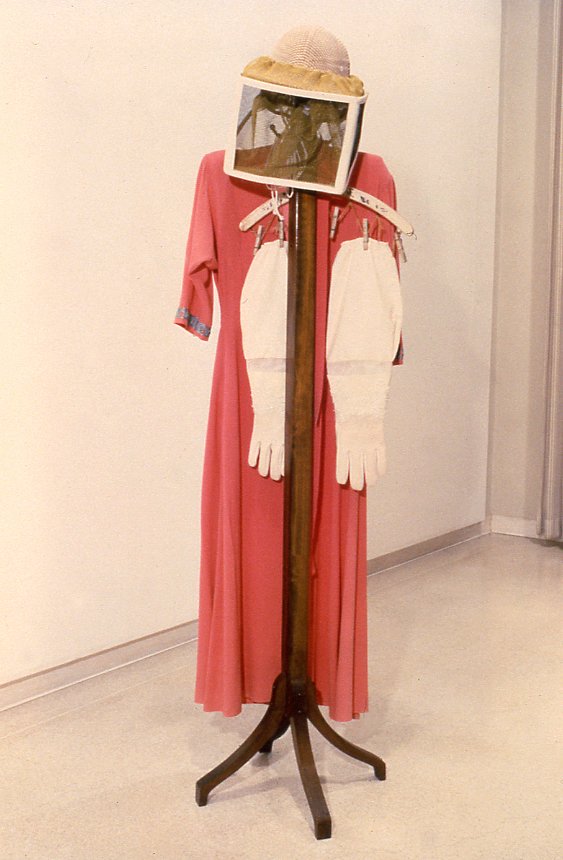

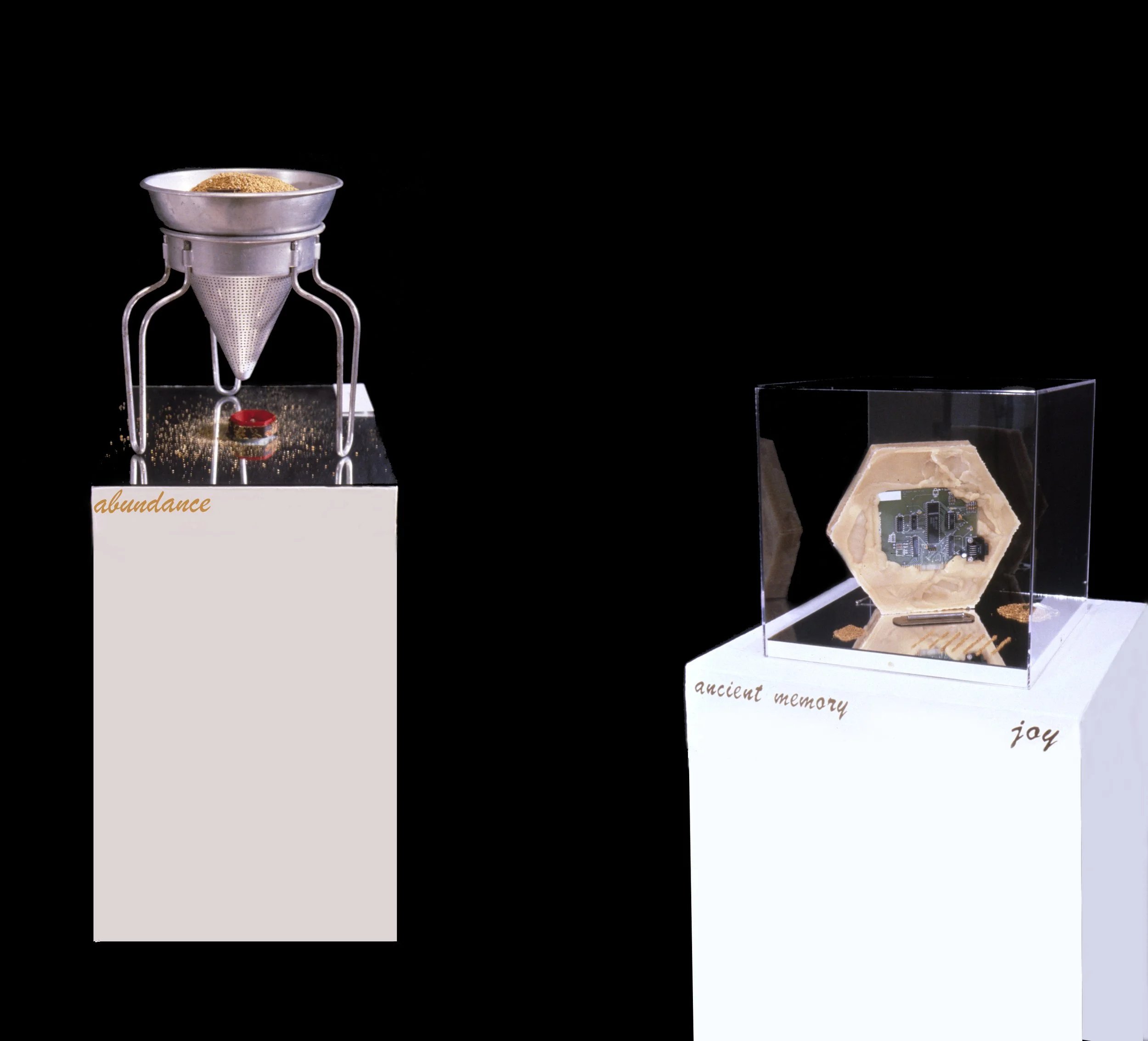
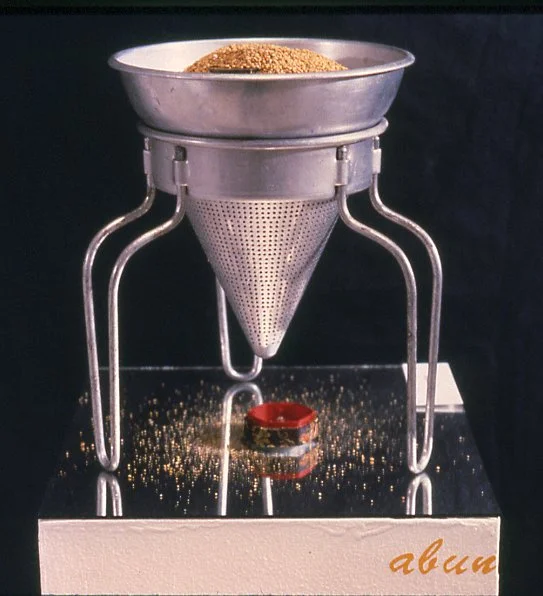
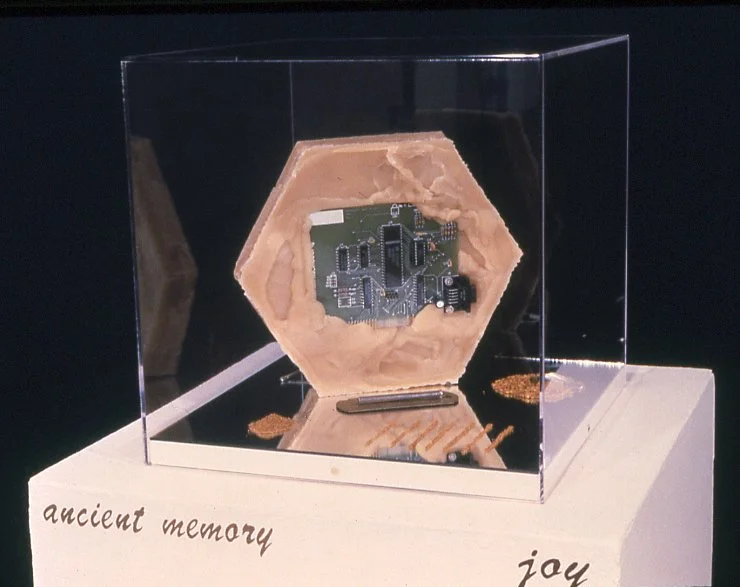
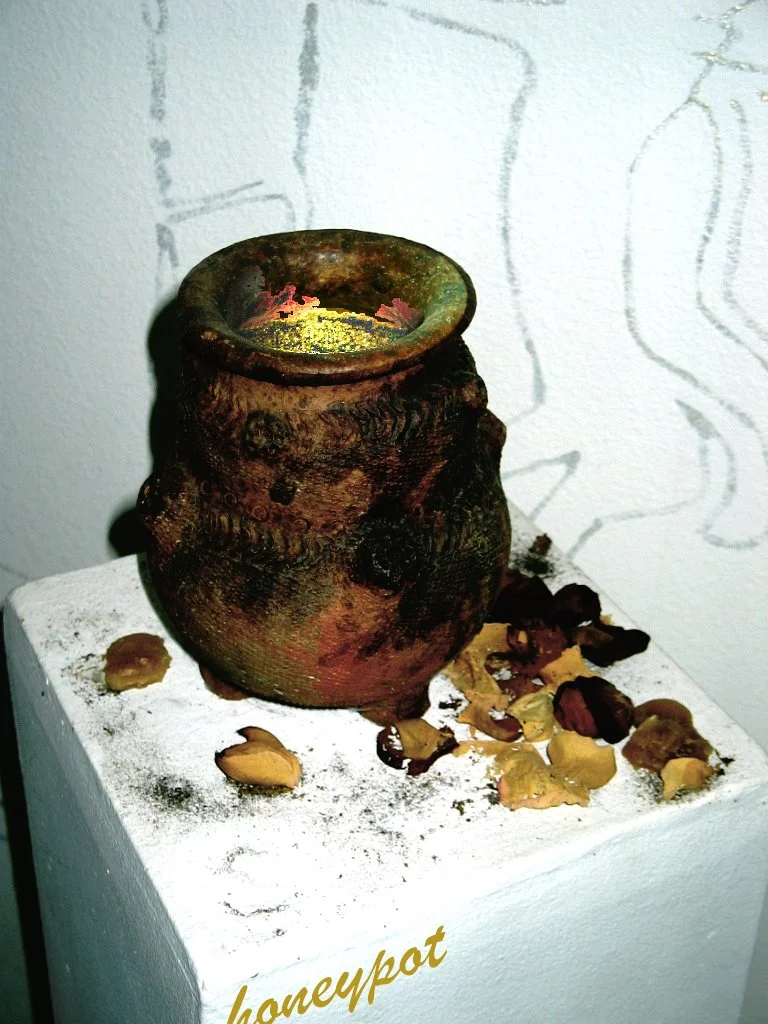
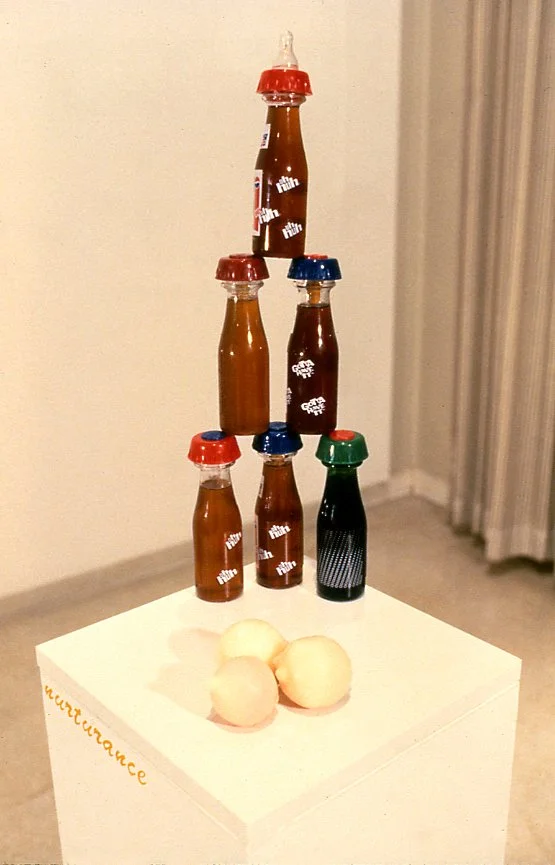
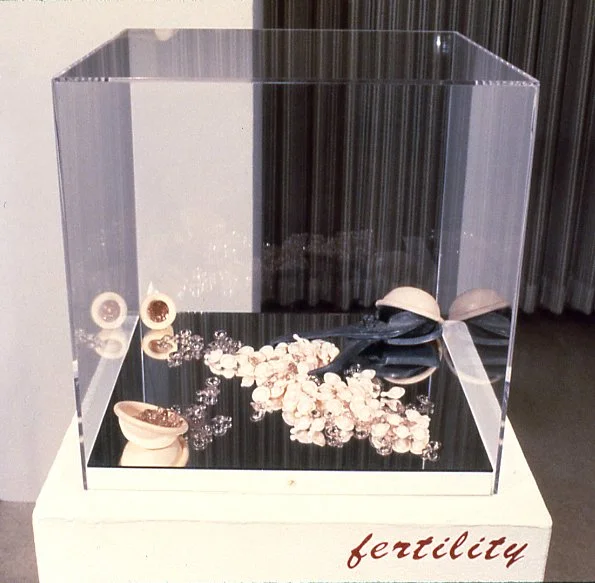
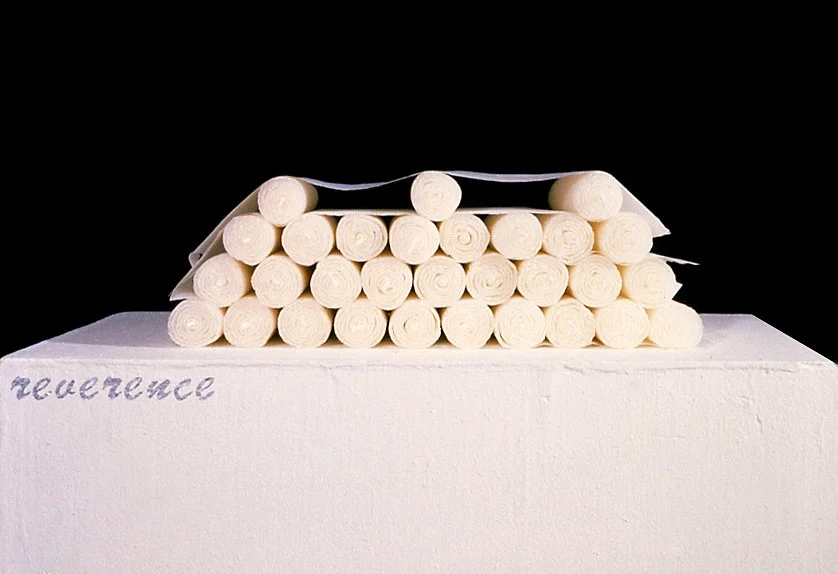
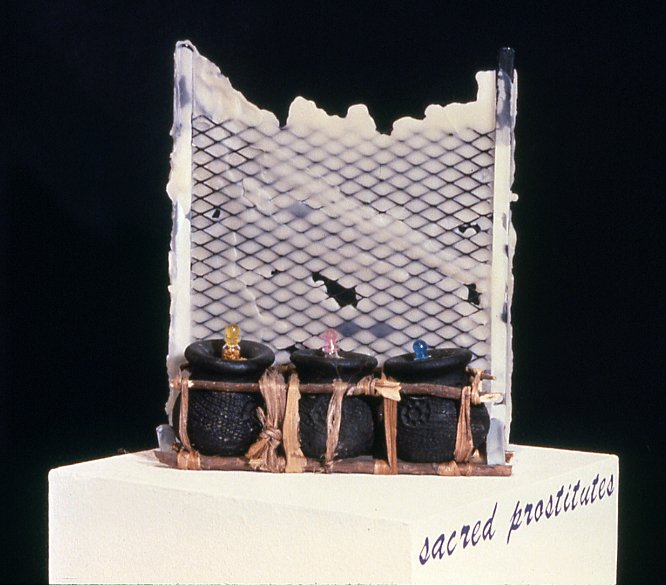
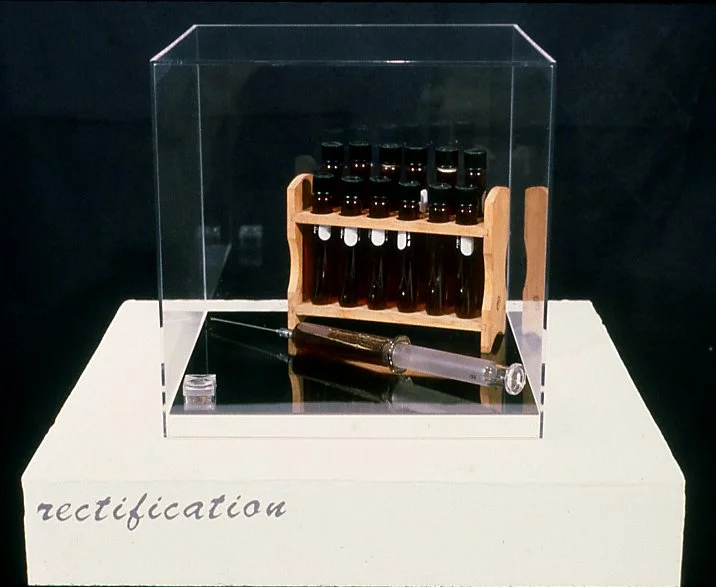
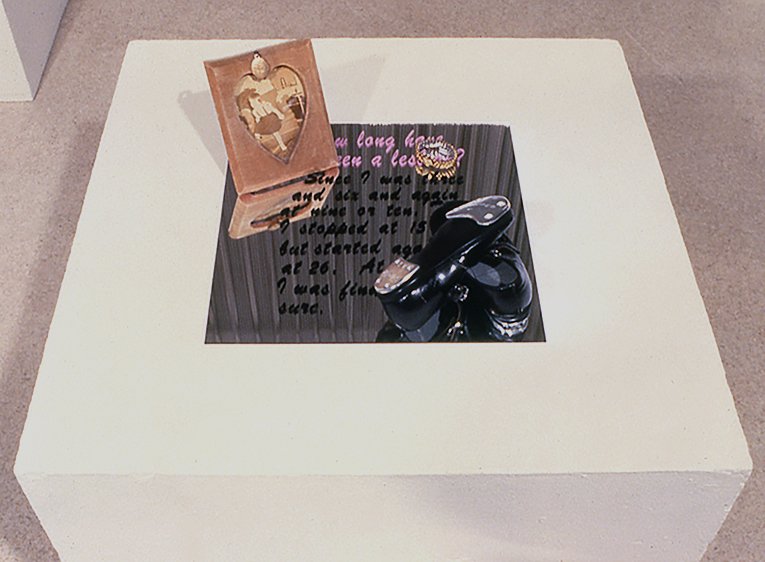
"In Stations of the Goddess Macko looks to the matriarchal era preceding the patriarchal order of Christianity. Instead of memorializing death and sin, her stations celebrate life and health...The central material in several of these found object assemblages is bee pollen, which embodies the idea of fertilty."
~ Mary Davis MacNaughton
Honeycomb Wall
Honeycomb Prints
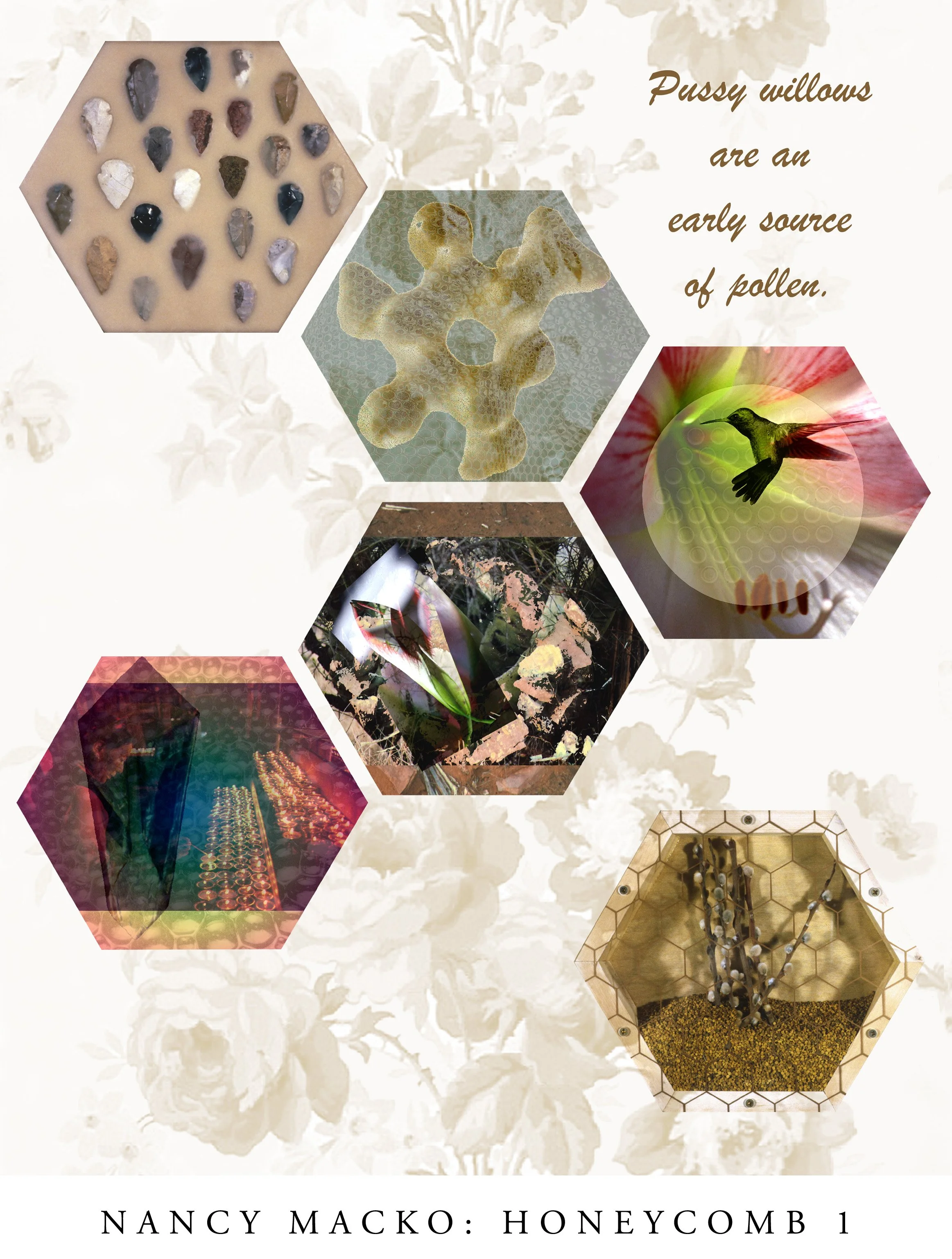
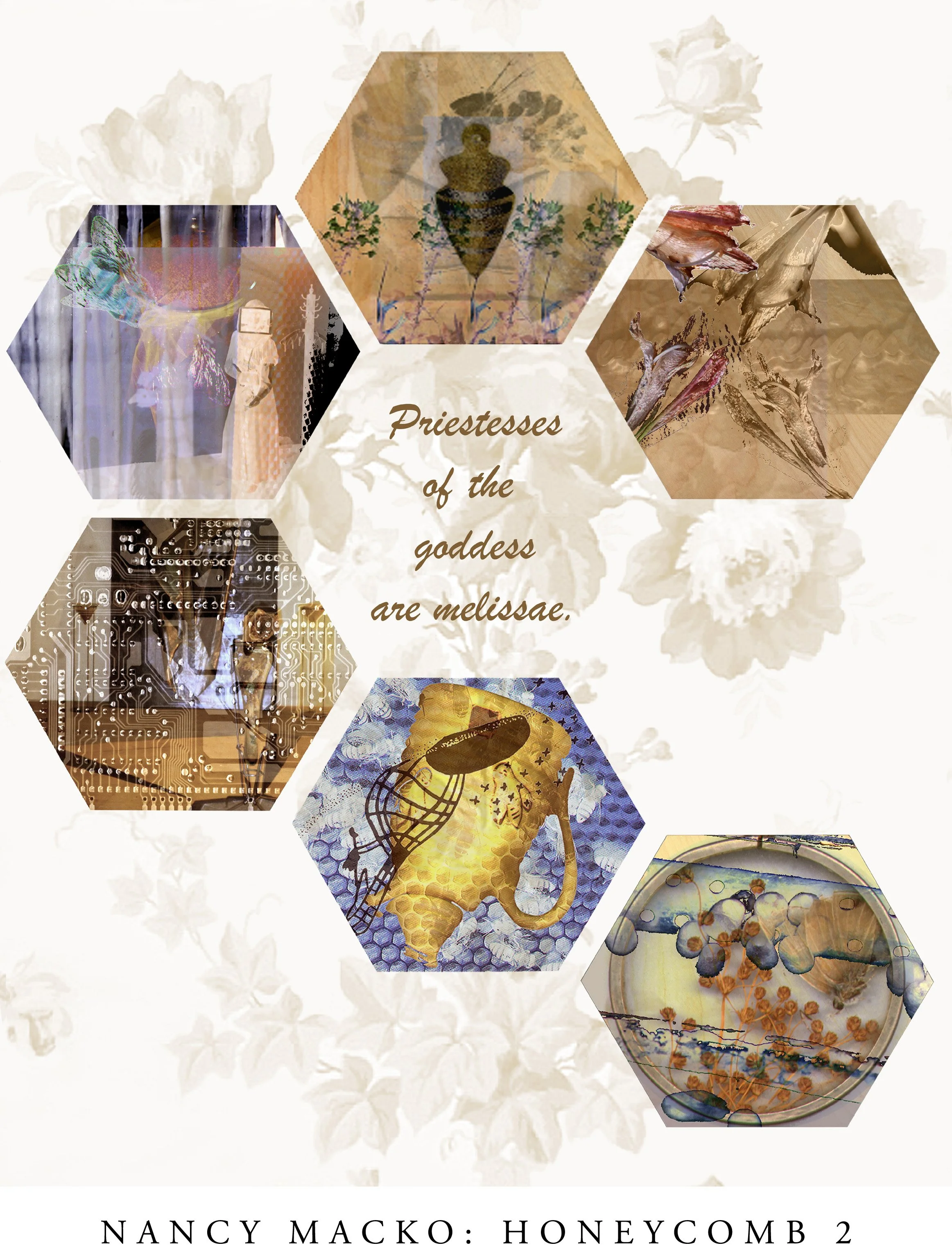
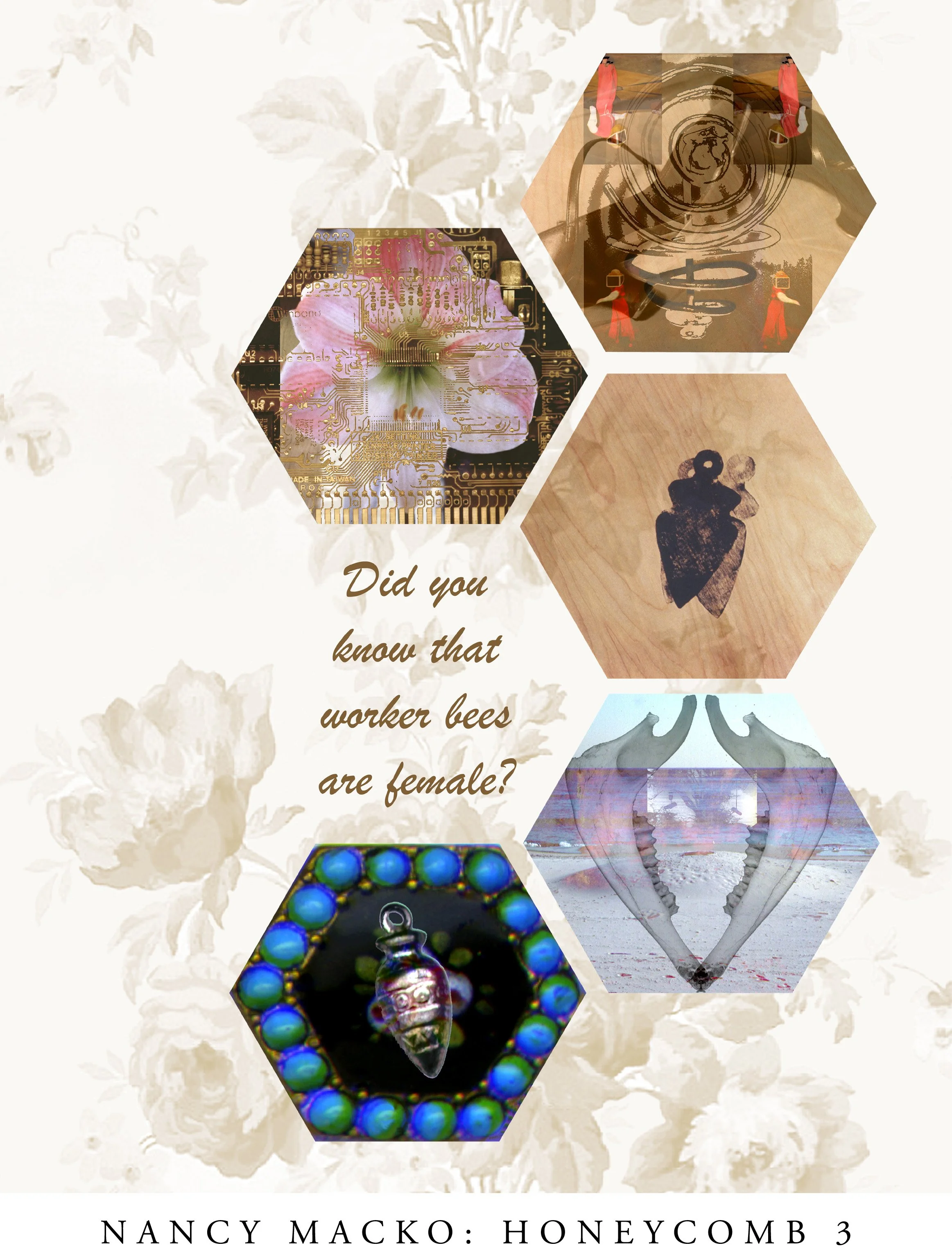
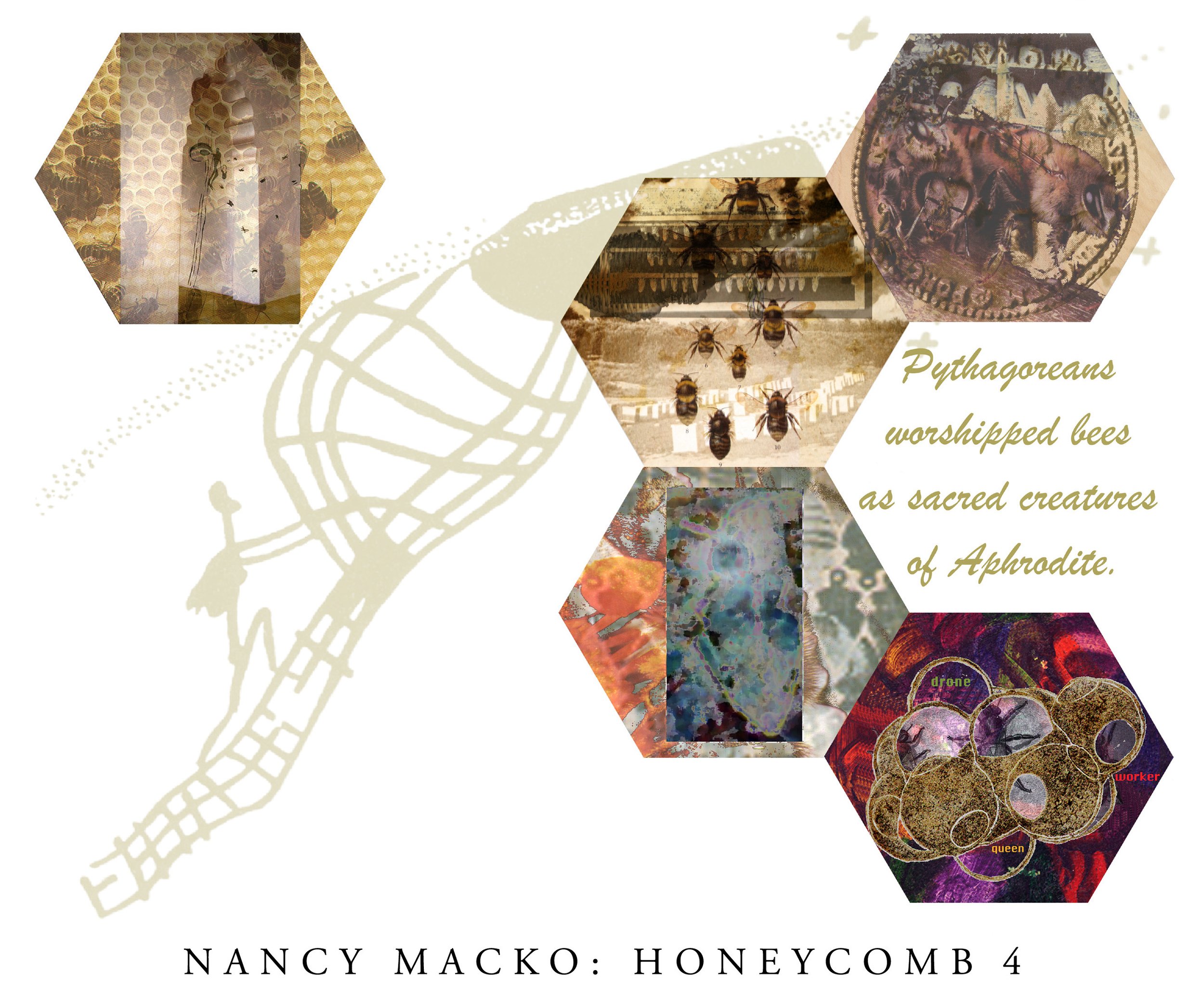
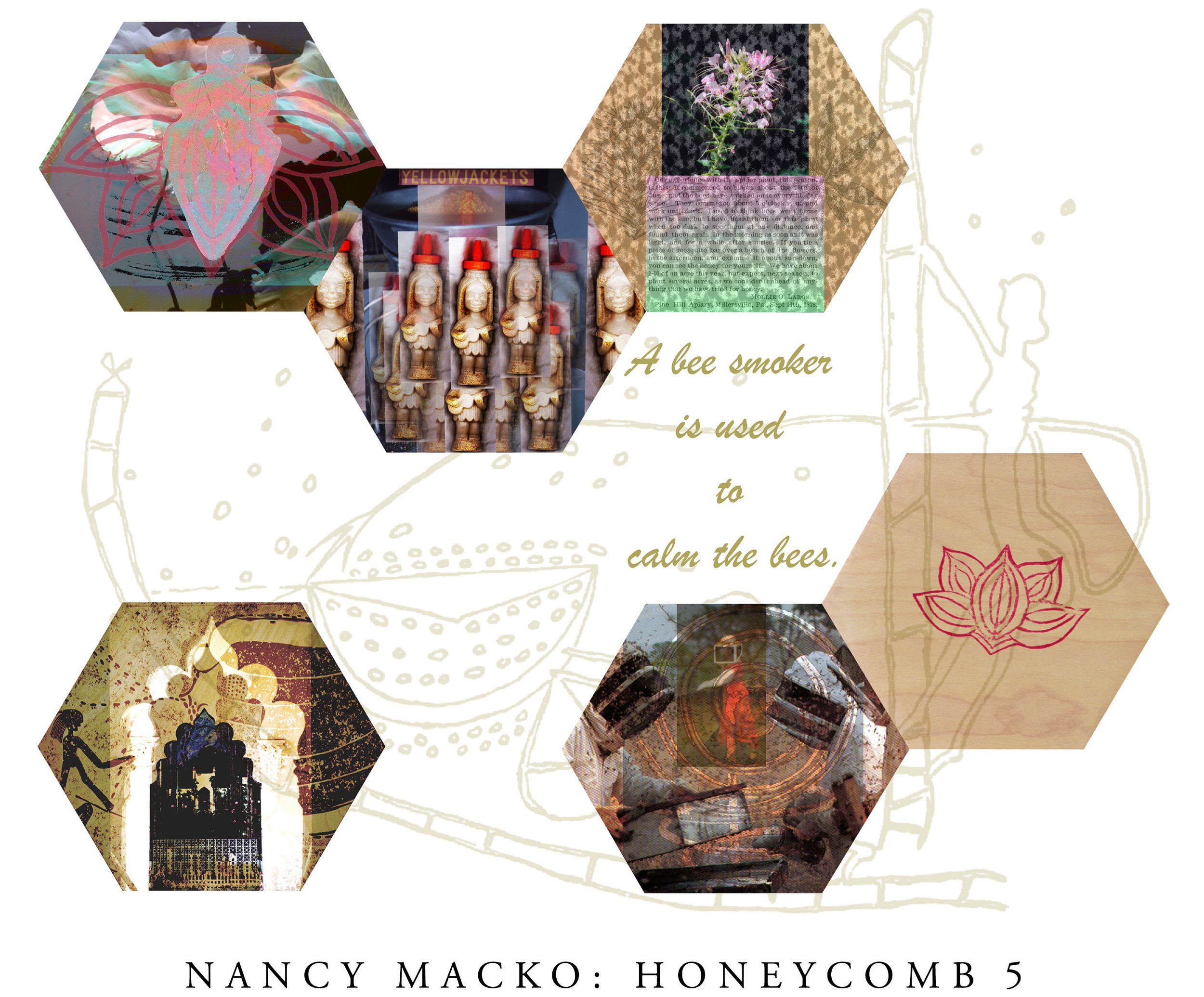
Dance of the Melissae is a multi-sensory, multi-media body of work that explores the world of the honey bee society and its relationship to art, science, technology and ancient matriarchal cultures. This piece was first exhibited at the Brand Library Art Gallery in Glendale, CA in 1994. The 3000 square foot space lent itself well to my ideas for creating a multi-sensory construction of an ancient and sacred site and its interior components. The integration and centralization of bees and bee worship by ancient matriarchal cultures are historical testament to the power and fascination of the astounding world of bees.
Borrowing images from nature and the bee society, I attempted to reveal the inherent connection between the natural world and technology. The piece incorporated mixed-media wall reliefs, found-object sculptures and computer-generated photographic images installed together and linking traditional media (drawing, painting, printmaking and sculpture) with the more contemporary world of digital media. From a conceptual base that is framed by feminist thought, I am using the "bee" and the "honeycomb" as metaphors to re-interpret scientific ideas. My intention is to suggest that science is based not only on observing nature's structures but also on imagining them.
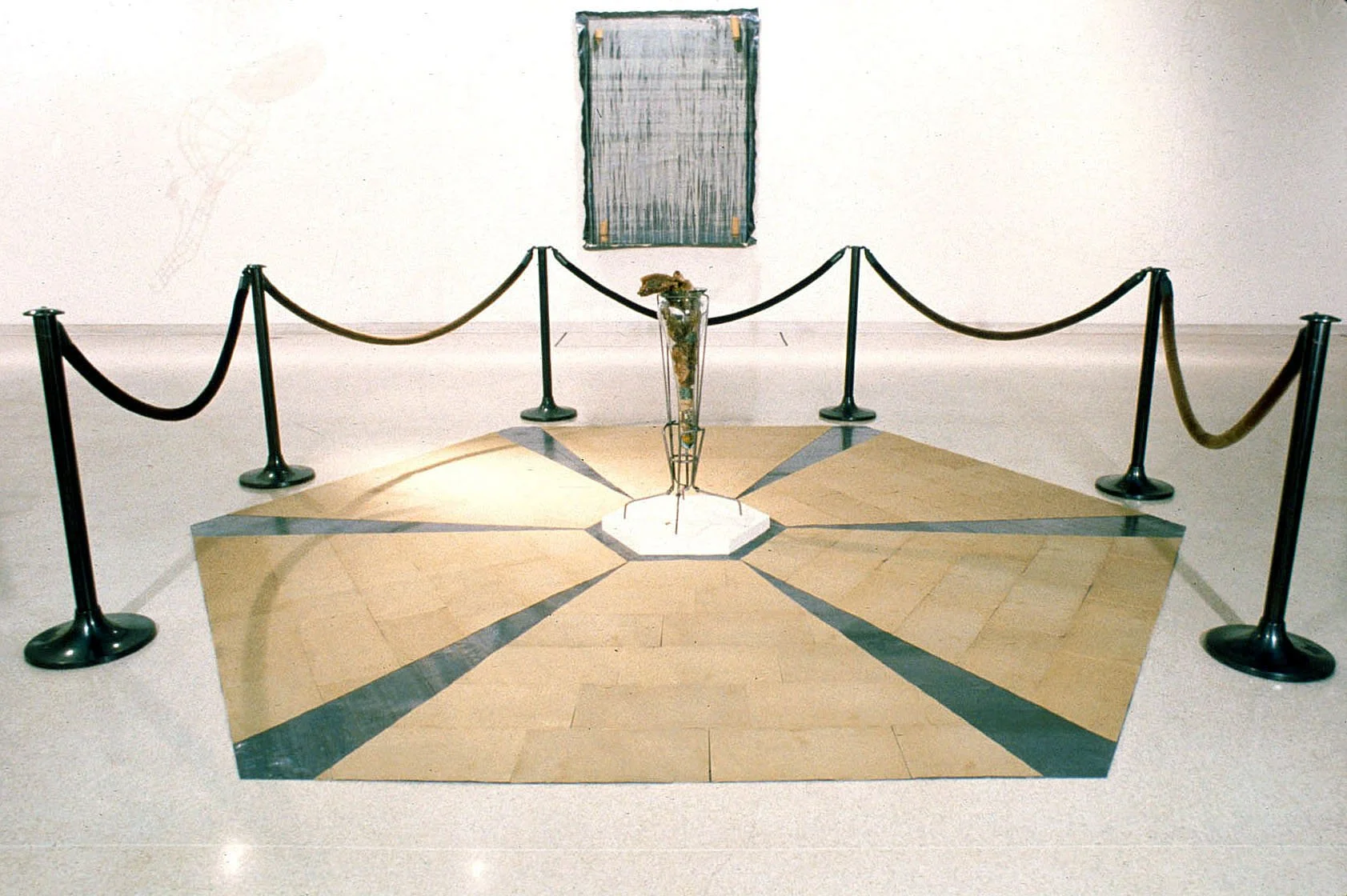
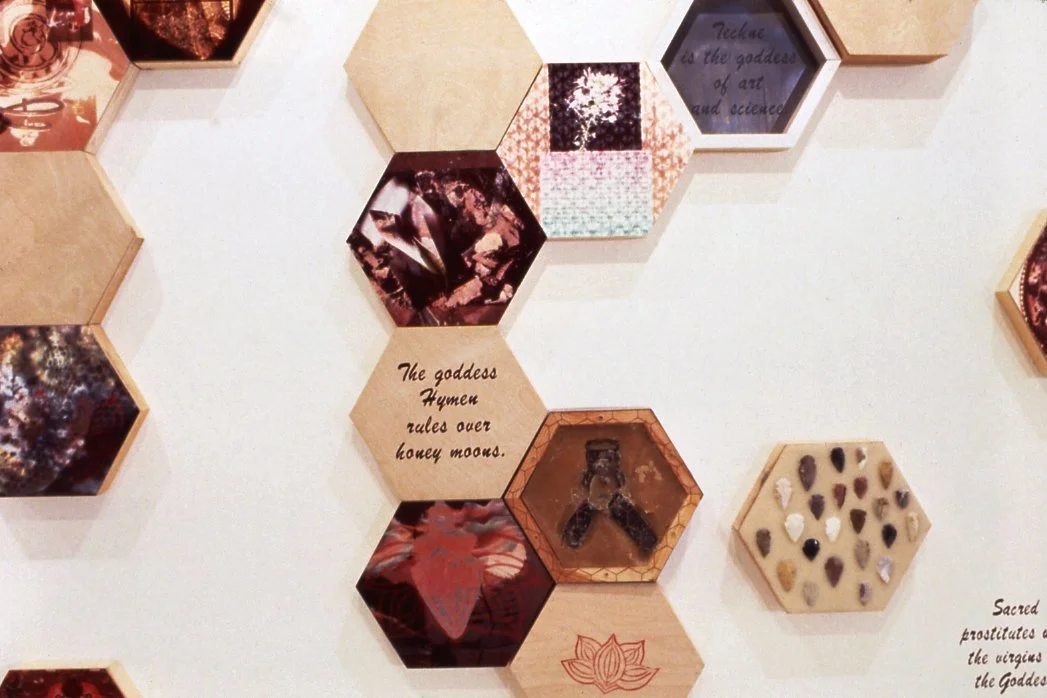
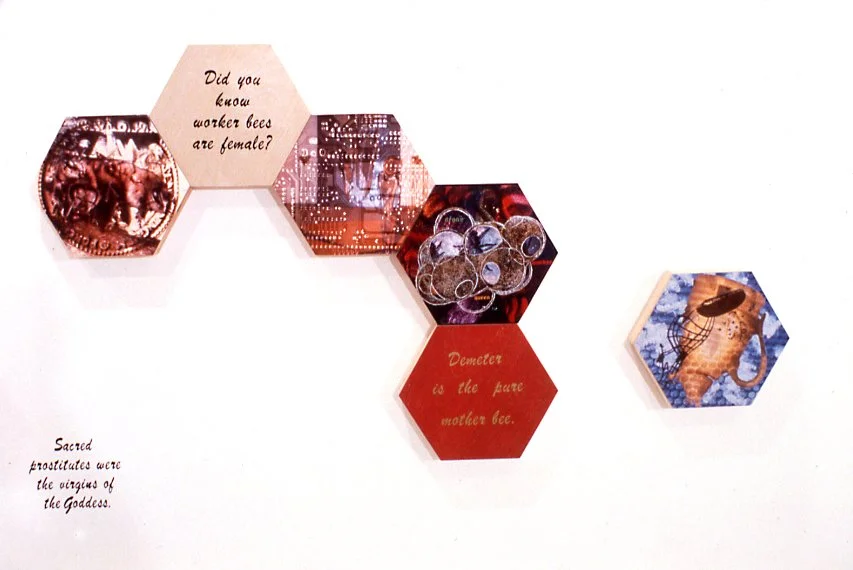
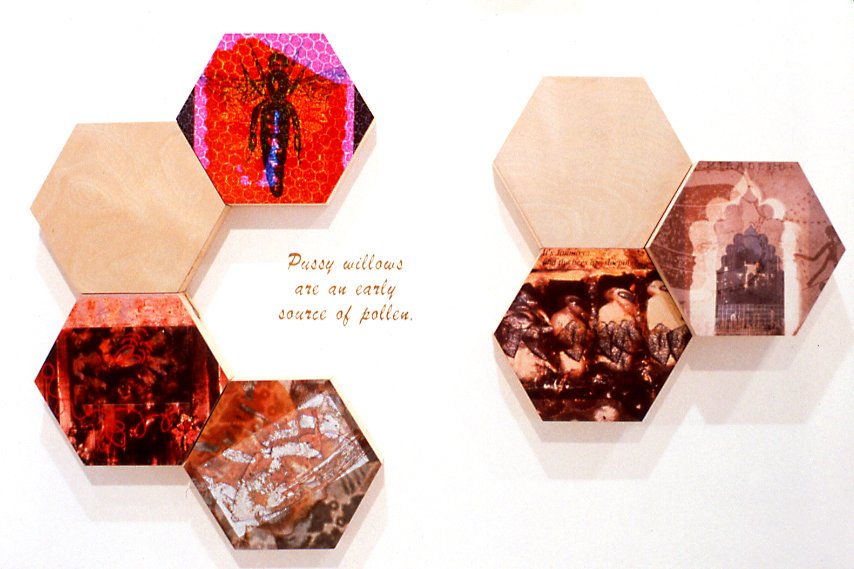
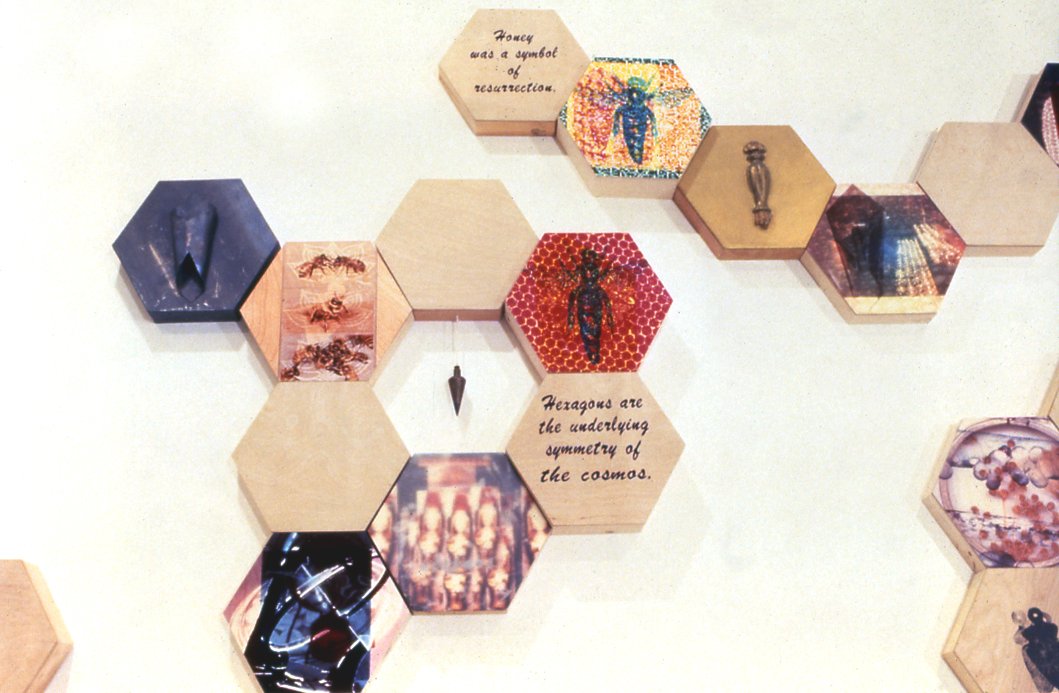
The installation is comprised of several parts: Bee Priestesses act as a talisman for fertility and fecundity and invoke a time when the power and mysteries of women and nature were revered and worshipped; Stations of the Goddess, sculptural haikus that look to the matriarchal era preceding the patriarchal order of Christianity; The Honeycomb Wall, 100 wood panels each 11 1/2" in diameter, the panels contain found objects related to honey bees, the geometry of hexagons and the chemistry of honey as well as printed images produced from linoleum blocks and scanned and layered computer-generated images output as cibachrome photographs; The Large Votives, re-call an ancient memory of nature as a goddess. Measuring 7' X 5', they are wood panels wrapped with lead sheeting and employ other mixed media materials that evoke a particular goddess. They included: Demeter, mother of the bees, Techne, goddess of art and science or craft and technology, and Hymen, who rules over marriages and honeymoons and because bees are hymenoptera (veil-winged); and Aphrodite’s Lattice, a floor piece to honor the ritual of meditation established by the Pythagoreans.
My basic fascination with the form of the hexagon prevails throughout this work. As a form found in nature, it has a long history that is grounded in geometry and goes back to Pythagorus. Related to ancient goddess worship and found naturally in honeycomb, it belongs to the different worlds of science and nature and acts as a link between them. The Honeycomb Wall itself has been re-configured for installations at Gregory Kondos Gallery, Sacramento in 1998; The Light Factory in Charlotte, NC in 1996; and the Municipal Art Gallery in Los Angeles in 1995. A smaller portion of it was exhibited at the Sam Francis Gallery in Santa Monica in 1994 and a related piece, Lessons from the Hive, was included in P.L.A.N. (Photography Los Angeles Now) at Los Angeles County Museum in July of 1995 as well as the SIGGRAPH Art and Design Show of 1994 in Orlando, Florida.
As Professor Mary Davis MacNaughton, Director of the Ruth Chandler Williamson Gallery at Scripps College, Claremont, CA, described the installation in her essay for the exhibition brochure, “walking into the space, one is aware of the distinctive fragrance of beeswax permeating the air. In addition to beeswax, fragrance comes from three glass brink vases, which contain aromatic spices of fenugreek, coriander and lavender. All of these spices intermingle to create a subtly intoxicating atmosphere. Also stimulating is the sound of the space, which resonates with a continuous rhythm; on closer listening, one realizes it is produced by acapella tap dancing. The sound's mesmerizing, repetitive pattern calls to mind humming bees and archaic chants.” It was my intention to not only challenge conventional notions of science as it relates to nature and art but to also fully involve the viewer in the sensual pleasures of Dance of the Melissae.